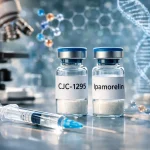

EDITORIAL DISCLAIMER: The following article is published for educational purposes only. Springfield Physical Therapy & Wellness does not prescribe, dispense, sell, or administer peptide therapies. This content is not medical advice. Peptide therapies are complex, rapidly evolving, and subject to federal and state regulation. Always consult a licensed physician or qualified healthcare provider before considering any peptide-based intervention.
Introduction
If you’ve spent any time following health and wellness content lately, you’ve probably noticed a word appearing everywhere: peptides. Athletes are talking about them. Anti-aging clinics are promoting them. Wellness podcasts can’t stop mentioning them. But what exactly is a peptide? And why does it matter?
The answer is both simpler and more profound than most people expect — and understanding the basics puts you in a much better position to evaluate the growing body of research and the increasingly loud marketing noise surrounding them.
The Biology: What Is a Peptide?
A peptide is a short chain of amino acids — the same building blocks that make up proteins. The distinction is one of size: while proteins are long, complex chains of hundreds or thousands of amino acids folded into intricate three-dimensional structures, peptides are shorter sequences, typically between 2 and 50 amino acids long.
Your body produces thousands of peptides naturally. They function as signaling molecules — essentially biological messengers that tell cells, tissues, and organs what to do. Hormones like insulin are peptides. So are many of the molecules that regulate inflammation, growth, immune function, digestion, and even mood.
Think of peptides as the body’s internal text message system — short, specific signals that trigger precise biological responses.
Why Are Peptides Generating So Much Attention?
Peptide research has exploded over the last two decades for a straightforward reason: their specificity. Because peptides can be synthesized in a lab to closely mimic naturally occurring compounds, researchers have been able to study whether administering specific peptides externally can influence biological processes in targeted, predictable ways.
This has led to a vast and still-growing field of investigation, with researchers exploring potential applications in areas including:
- Muscle repair and recovery after injury or surgery
- Metabolic regulation, including blood sugar and appetite control
- Wound healing and tissue regeneration
- Hormonal support, particularly growth hormone release
- Inflammation reduction
- Skin health and collagen production
- Neurological and cognitive function
FDA-Approved Peptides vs. Experimental Peptides
This is where the conversation gets more nuanced — and where it’s important to think clearly rather than follow hype.
Some peptides are fully FDA-approved drugs with decades of clinical evidence behind them. Insulin, one of the most widely used medications in the world, is a peptide. GLP-1 receptor agonists like semaglutide (Ozempic, Wegovy) and tirzepatide (Mounjaro, Zepbound) — which have transformed the treatment of type 2 diabetes and obesity — are peptide-based drugs approved through rigorous clinical trials.
Other peptides exist in a far less settled scientific and regulatory space. Some have shown promising results in animal studies or small human trials, but have not completed the large-scale, controlled clinical research required for FDA approval. Others have been flagged by the FDA for safety concerns related to manufacturing quality, immunogenicity, or insufficient human safety data.
| Property | Detail |
| FDA-Approved Peptides | Insulin, GLP-1 agonists (semaglutide, tirzepatide), oxytocin, vasopressin — among others. Approved through rigorous clinical trials with established safety profiles. |
| Category 1 Peptides | Under active FDA evaluation for compounding eligibility. Research is ongoing. Status can change. |
| Category 2 Peptides | Designated by FDA as having safety concerns — restricted or prohibited from pharmacy compounding as of current guidelines. Includes some widely discussed wellness peptides. |
| Dietary / Topical Peptides | Collagen peptides, topical copper peptides, oral supplements. Generally less regulated; efficacy varies by product and application. |
How Are Peptides Administered?
This varies widely by the specific peptide and its intended research or clinical application. Common routes that appear in the scientific literature include:
- Subcutaneous injection (under the skin) — the most common method for many peptides studied in clinical contexts
- Intramuscular injection
- Oral supplementation (for certain peptides like collagen, which survives digestion)
- Topical application (creams, serums — common in skincare)
- Nasal spray
Importantly, the administration method significantly affects bioavailability — how much of the peptide actually reaches its target tissue and how effectively it acts. This is one of the many reasons why self-administration outside of medical supervision carries real risks.
What the Research Actually Shows — And What It Doesn’t
The peptide research landscape is genuinely exciting in many areas, while simultaneously being far less conclusive than popular wellness coverage suggests.
For FDA-approved peptide drugs like GLP-1 agonists, the evidence is robust, peer-reviewed, and backed by large randomized controlled trials. For many other peptides discussed in wellness circles, the evidence base is largely preclinical — meaning studies conducted in cell cultures or animal models — with limited, small, or methodologically incomplete human trials.
Preclinical results are promising leads for further research, not proof of human efficacy. The history of medicine is full of compounds that worked brilliantly in mice and failed in humans.
This doesn’t mean the research is uninteresting or that the field won’t produce important breakthroughs — it may well do so. It means that intellectual honesty requires acknowledging what we know, what we suspect, and what remains to be established.
The Regulatory Landscape: Why It’s Complicated
The FDA regulates peptides as drugs if they are marketed for therapeutic use in humans. This means that marketing, prescribing, and dispensing peptides for medical purposes requires navigating a complex regulatory framework that has been changing rapidly.
In recent years, the FDA has designated several popularly discussed peptides as Category 2 substances — restricting them from pharmacy compounding due to insufficient safety data. As of early 2026, some reclassification has occurred, moving certain peptides back toward Category 1 status. This remains an active and evolving regulatory situation.
For patients and consumers, the practical implication is clear: anyone considering peptide therapy of any kind should work exclusively with licensed physicians who are current on the regulatory status of specific compounds and who operate within a compliant clinical framework.
The Bottom Line
Peptides represent a genuinely fascinating and rapidly evolving area of biomedical research. Some peptide-based drugs have already transformed medicine. Others are at various stages of investigation, with evidence ranging from compelling to preliminary to speculative.
Understanding the difference between FDA-approved peptide medications, investigational compounds, and the broader wellness category requires careful reading, critical thinking, and guidance from qualified medical professionals — not wellness influencers, not social media, and not marketing materials.
The articles that follow in this series explore specific peptide categories in educational depth, with the same commitment to accuracy and nuance that this introduction has aimed to establish.
This article is for educational purposes only. Springfield Physical Therapy & Wellness does not prescribe or administer peptide therapies. Consult a licensed physician for any medical decisions.